STANDARDS & QUALITY
STANDARDS, DECREES AND CERTIFICATIONS
Find out about the standards, decrees and certifications that apply to our various product ranges.
For further information on standards, decrees and product labels, please refer to the relevant product pages.
PLATFORMS
SCAFFOLD TOWERS
STEPLADDERS
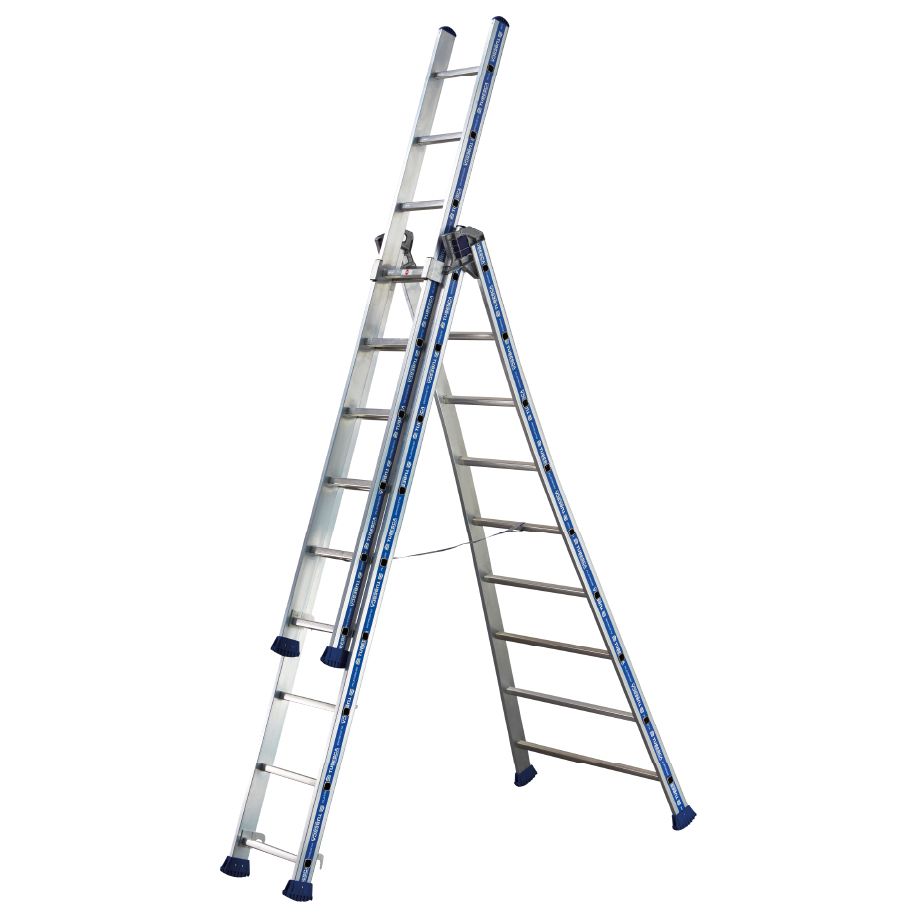
LADDERS
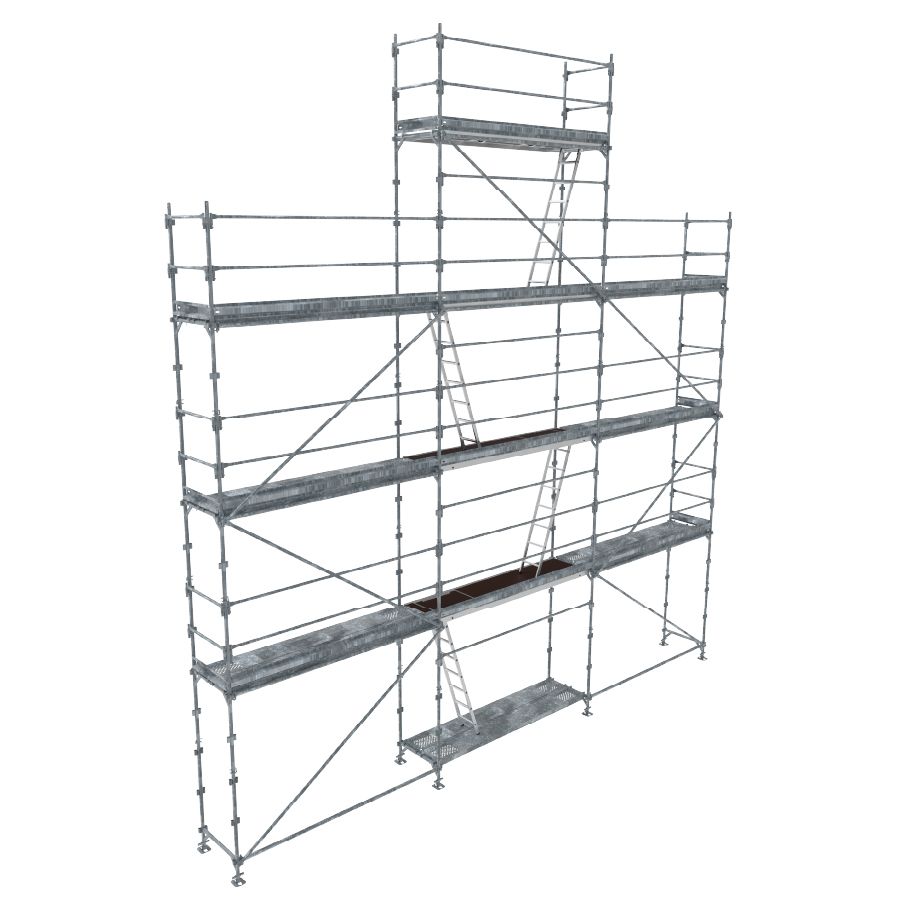
FIXED SCAFFOLDING
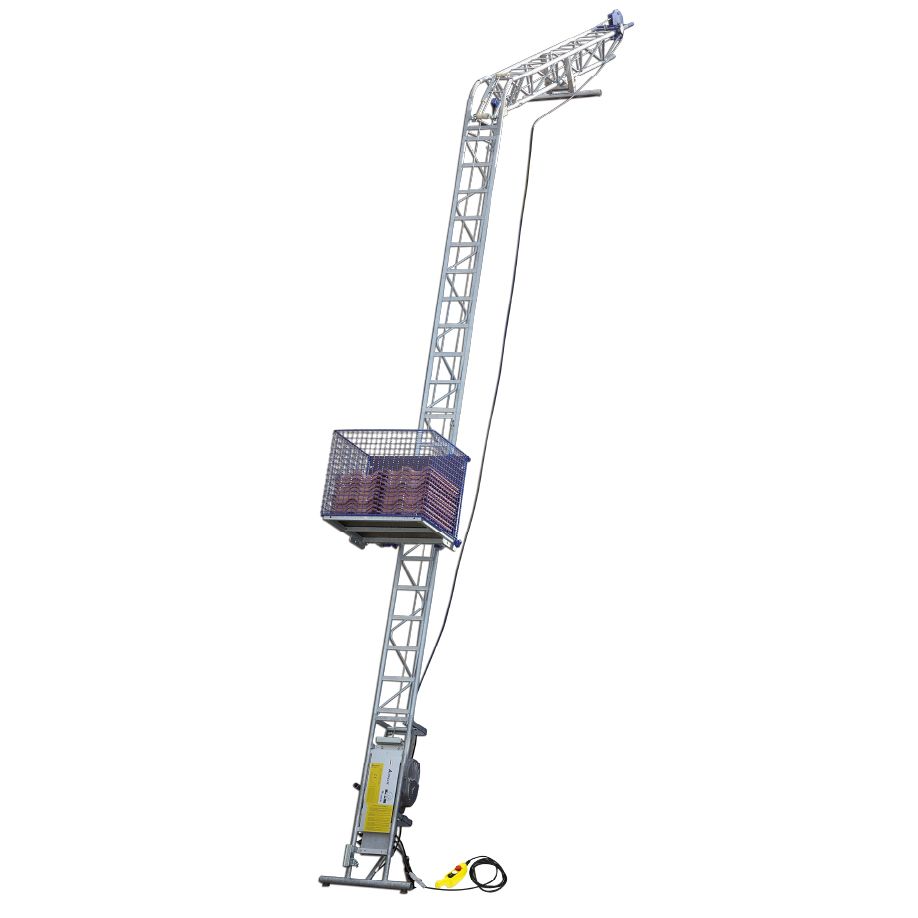
LADDER-LIFT
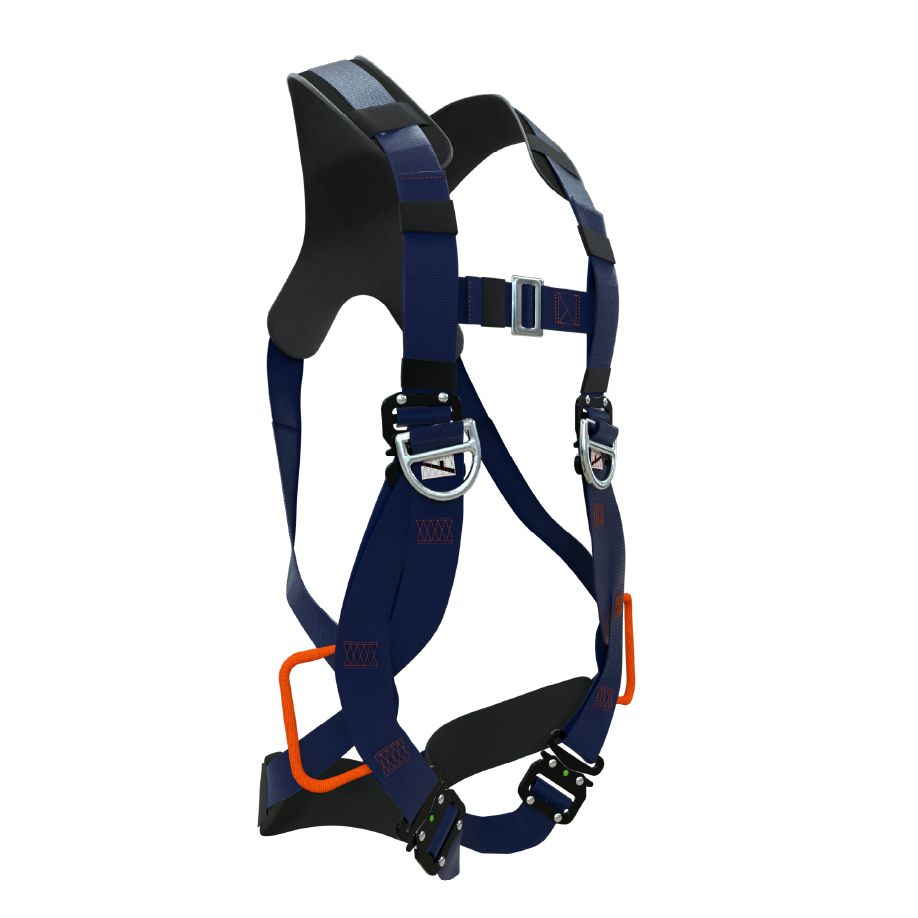
FALL ARREST PROTECTIONS
CRINOLINES
MODULAR SOLUTIONS
DEVELOPMENTS IN THE STANDARD FOR SCAFFOLD TOWER – EN 1004-1
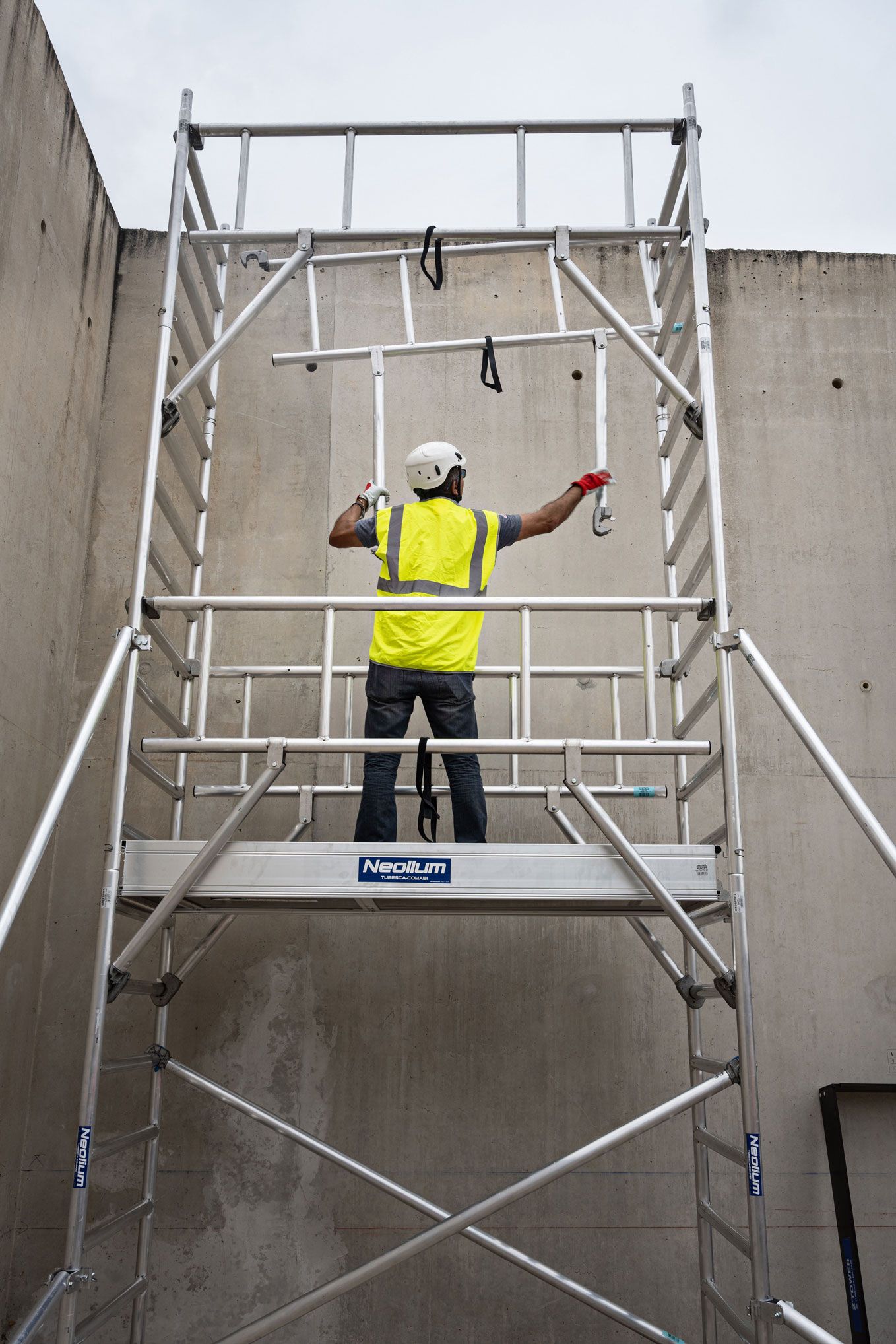
The NF EN 1004 standard of 2005, relating to prefabricated scaffold towers, was updated in 2020.
It was published in December 2020 and came into force in November 2021 under the designation EN 1004-1.
MAIN CHANGES
• Improve safety by reducing the maximum spacing between platforms / decks.
• The first step must be no more than 40 cm above the ground, even when the wheels are set to their highest position.
• Improve stability.
We have therefore upgraded most of our scaffold towers to bring them into line with the revised standard.
FIXED SCAFFOLDING
The NF mark, administered by AFNOR, is intended to certify that scaffolding complies with French standards and that factory inspections are carried out during manufacture, monitored by an external laboratory.
It applies only to prefabricated, unshaded working scaffolds secured to building facades, as specified in standards NF EN 12810 and NF EN 12811. Scaffolding complying with this harmonisation document may be erected to a height of up to 24 m above ground level, under the specified loading conditions. This classification officially certifies the quality of the design and manufacture of our scaffolding. They offer users safety and value for money thanks to their strength, sturdiness, durability and comfort. The erection and use of the R200 and M368 scaffolds must be carried out in accordance with the instructions set out in our instruction manual and operating instructions. The combination of our equipment with components manufactured by a competitor is strictly prohibited (decree of 1 September 2004 – Art. (R-233-13-33).
Scaffolding is divided into six classes corresponding to various uses:
Class 1: 75 daN/m²
inspections and work using lightweight tools, without storage.
Class 2 and 3: 150 daN/m² and 200 daN/m²
inspection work, painting, façade restoration, waterproofing, plastering, …
with no storage other than for materials immediately used.
AFNOR Certification warns scaffold users of the dangers of mixing components from different models.
Scaffolding products authorised to bear the NF mark are increasingly being copied slavishly. For this reason, the Special Committee* for the NF-Echafaudages mark warns users of the dangers of mixing such counterfeit products with equipment bearing the NF mark. The NF mark certifies the design of equipment comprising duly identified components, carries out tests, verifies the design calculations and ensures, through marking, traceability and cross-checks, that manufacturing standards remain consistent over time. In scaffolding, the components and platforms are certified. Scaffolding may only be considered NF-certified if all its component parts are those listed in the scaffolding parts list and are marked ‘NF’ with the following logo: A technical manual and an information sheet must accompany the scaffolding. The NF mark therefore guarantees to user that scaffolding erected using components of the same NF model complies with the relevant standard and the mark’s specific regulations, and that its strength and stability can be verified by calculation. The characteristic strengths of a scaffold are determined by testing; where different materials are used, these tests cannot be carried out and it is therefore impossible to verify, by calculation, that such a scaffold will remain stable. Whereas the strength of NF equipment components and their assemblies is specified, that of the replicas may differ. If the mixture is used as it is, it may result in damage or accidents. In the event of an accident, the user, the renter/installer, the project manager and the client will be held liable.
Article R. 4323-70 du code du travail : (anciennement article R.233-13-32)
‘Where the scaffolding assembly is erected in accordance with the manufacturer’s instructions, it is erected in accordance with the design calculations referred to in those instructions. All load values are given for guidance only. Under no circumstances can they replace the technical data contained in the instruction manual and/or the design calculations.»
* The specific committee for the NF-Equipment de chantier mark comprises users, technical bodies, health and safety organisations, representatives of the Ministry of Labour and the Ministry of Industry, a representative of the Directorate-General for Competition, Consumer Affairs and Fraud Control (DGCCRF), and manufacturers.
DECREES
Decrees 65-48 of 8 January 1965 and 2004-924 of 1 September 2004, together with supplementary legislation, in particular the Order of 21 December 2004 concerning the inspection of scaffolding, constitute the legislative and regulatory framework governing safety at work. Users are required to comply with these rules on every worksite. Circular DRT 2005/08 clarifies the previous provisions.
The Warenwet Decree (Netherlands)
The Warenwet Decree is a Dutch regulation governing the safety of products placed on the market in the Netherlands. For equipment used to access heights, such as ladders, step ladders, platforms and scaffolding, it sets out additional requirements regarding design, manufacture and performance in order to ensure user safety.
Products that comply with the decree Warenwet have been assessed by an independent body and meet the regulatory requirements applicable in the Netherlands. This compliance is essential for marketing certain product ranges on the Dutch market.
At Tubesca-Comabi, the products in question are designed, developed and tested to meet the requirements of the Warenwet decree, in addition to the applicable European standards. This approach ensures a high level of safety, quality and compliance, whilst facilitating their sale on European markets.
THE NF MARK
The mark defined by decree 84-74 is the national quality mark certifying:
Product compliance:
• in accordance with French or European standards
• but also to the specific requirements set out in the brand’s specific standard.
Regular monitoring of the company’s quality assurance system and production in accordance with the conditions set outbyAFNOR.
The brand requires manufacturers to undergo inspections, which are carried out at every stage of production by an AFNOR-accredited certification body (Certification 93571 Saint-Denis Cedex) to verify performance and ensure consistent quality standards.
EN131
1.1. INTRODUCTION
This information for users explains how to use the ladder safely. Before using this product, and for your own safety, please read this user information carefully and keep it for future reference. When the ladder is handed over to a third party, the information intended for the user must be passed on to the new owner.
1.2. BEFORE USING THE LADDER (EXTRACT FROM EN 131-3)
a Is your state of health such that you can use the ladder? Certain health conditions, medication, or alcohol or drug abuse may pose a safety risk when using the ladder.
b If you are transporting ladders on a roof rack or in a lorry, make sure they are properly fixed/positioned to prevent any damage.
c Check the scales after delivery and before first use to assess the condition and operation of all parts.
d Carry out a visual inspection of the ladder to check for any damage and ensure that it can be used without risks at the start of each working day on which the ladder is to be used.
e Professional users must carry out regular checks. You can find our inspection sheets on the product pages.
f Make sure the ladder is suitable for its intended use.
g Do not use a damaged ladder.
h Remove all impurities from the ladder, such as fresh painting, dirt, oil or snow.
i Before using the ladder in a frame professionnel, you must carry out a risks assessment in accordance with the guidelines in force in the country where it is to be used.
1.3. POSITIONING AND SETTING UP THE LADDER (EXTRACT FROM EN 131-3)
a The ladder must be positioned correctly and at the correct angle; for example, in the case of leaning ladders (angle of inclination approx. (1:4), horizontal bars or steps and double ladders must be fully extended.
b You must fully lock any locking mechanisms fitted to the ladder before using it.
c The ladder must be placed on a section, level and stable surface.
d You must lean a ladder against a flat, solid surface and secure it before use, for example, by means of attachments or by using a suitable device to ensure its stability.
e You must never reposition a ladder from the top.
f When positioning a ladder, you must ensure that it is not likely to collide with pedestrians, vehicles or doors, for example. Where possible, lock doors (but not emergency exits) and windows in the work area.
g Identify all potential risks that may be caused by electrical equipment, such as overhead high-voltage power lines or other accessible equipment.
h The ladder must rest on its feet and not on its bars or steps.
i You must not place ladders on slippery surfaces (for example, frozen, braces or solid but obviously dirty surfaces) unless you take additional measures to ensure that the ladder cannot slip or that the surfaces are sufficiently clean.
1.4. USE OF LADDER (EXTRACT FROM EN 131-3)
a Do not exceed the maximum load for each type of ladder.
b Do not exceed the maximum number of users for the scale / scale segment.
c Do not lean out too far; users must stand at waist height between the ladder uprights, with both feet on the same rung.
d Do not climb down from a leaning ladder at a great height without additional safety measures, such as, for example, attachments or a suitable device to ensure stability.
e Do not use a double ladder to access another level.
f Do not use the top three steps / bars of a leaning ladder as a standing surface.
g Do not use the top two steps / bars of a double ladder without a platform and without hand/knee supports as a foothold.
h Do not use the top four steps / bars of a double ladder fitted with a telescopic ladder as a support.
i Only use ladders for simple, short-term tasks. j Use non-conductive ladders for work that you need to carry out on live electrical equipment.
j Use non-conductive ladders for any work you need to carry out on live electrical installations.
k Do not use the ladder outdoors in adverse weather conditions, such as strong winds, for example.
l Take precautions to ensure that children do not play on the ladder.
m If possible, lock the doors (but not the emergency exits) and windows in the work area.
n Climb up and down whilst facing the ladder.
o Hold the ladder firmly when climbing up or down.
p Do not use the ladder as a walkway.
q Wear suitable footwear when climbing a ladder.
r Avoid any excessive lateral stress, for example when drilling into masonry or concrete.
s Do not stay on the ladder for too long without taking regular breaks (fatigue is a risk).
t If you wish to reach a greater height, the ladders must extend at least 1 m beyond their point of support.
u Any items you carry when climbing a ladder should be light and easy to handle. When carrying objects, fit a handrail to act as side fall arrest protection.
v When using double ladders, avoid tasks that involve lateral stress, such as drilling into hard materials (e.g. masonry or concrete) from the side.
w When working on a ladder, you must hold on with one hand or, if this is not possible, you must take additional safety precautions.
x Do not use double ladders as step ladders.
1.5. REPAIR, MAINTENANCE AND STORAGE
Repairs and maintenance work on the ladder must be carried out by qualified personnel in accordance with the manufacturer’s instructions. Spare parts can be ordered from the manufacturer. You must store ladders in accordance with the manufacturer’s instructions, away from the elements.
1.6. CLEANING
Clean the product with water mixed with a usual cleaning product.
Warning
Risk of slipping if there is water on the steps! After cleaning, dry the steps and handrails thoroughly.
1.7. ELIMINATION
The product is mainly made of aluminium. Remove the product components as follows:
• Aluminium: Recycling
• Steel: Recycling
• Plastic: Energy recovery
(ladder feet, end caps, straps)
2. Scale control
The product’s operational safety must be checked regularly by an EXPERT. The specialist is authorised to carry out the inspection by the operator and by attending the seminars required under the applicable national legislation.
Inspection intervals must be tailored to the operating conditions. The check must be carried out at least once a year.
The performance of the check must be documented. Inspection sheets for product testing are available on the TUBESCA-COMABI website. Once the inspection has been carried out and if the result is positive, affix the TUBESCA-COMABI inspection label (ref. (828384 or 828385) on the product. The month and year of the next inspection must be clearly legible.
2.1. AUDIT CRITERIA
Uprights
Deformation, damage (e.g. cracks), sharp edges, splinters, burrs, wear protection treatment (wood)
Protection anti-spreading
Completeness/fastener Functionality Damage/corrosion
Cladding components
Damage/corrosion Integrity/fastener Functionality
Wear Lubrication (mechanical parts)
Bars/steps/platforms
Deformation; damage (e.g. cracks); sharp edges, chips, burrs; connections to the upright (crimping, screw couplers, rivets, welds); wear (e.g. contact surface, platform support)
Ladder feet/castor wheels
Completeness/wear and corrosion resistance, functionality
Identification marking
Instructions for use (pictogram)
Accessories (e.g. upright extension, foot extension, wall support)
Completeness/fastener
AN INTEGRATED TEST LABORATORY
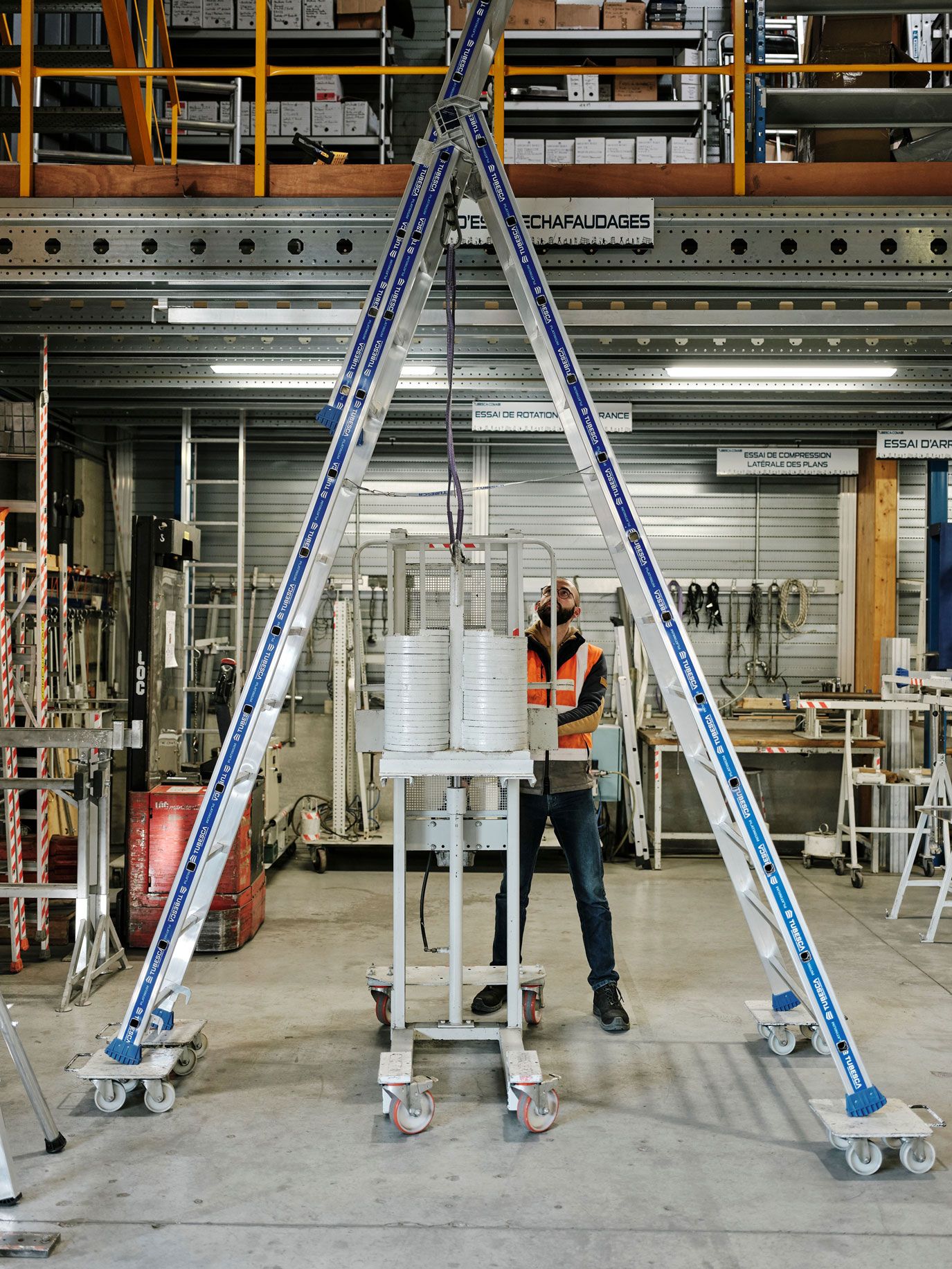
At Tubesca-Comabi, the quality and safety of our products are verified well before they are brought to market. Thanks to our integrated test laboratory, we carry out rigorous tests in-house throughout the development and manufacture of our equipment.
Whether it’s mechanical strength tests, load tests, stability tests, durability tests or conformity checks: our teams inspect every product in accordance with the requirements of the applicable standards and our own quality criteria.
This comprehensive control over testing enables us to innovate more quickly, guarantee reliable performance and offer our customers safe, sturdy solutions tailored to the most demanding applications.